
A story begins in one mind, but its consequences need not remain there. A reader recognises a fear they could never name. A film makes an unfamiliar life feel close. Someone encounters a possibility and begins to act differently. This passage from imagination into experience is part of what gives storytelling its power. It also offers a way into magick: the relationship between intention, symbols and transformation.
What is magick? When intention takes form
In Magick in Theory and Practice, Aleister Crowley defines magick as:
“Magick is the Science and Art of causing Change to occur in conformity with Will.” 1
His example is writing a book. Pen, ink, language and publishing become the means through which an intention reaches other people. 1 The imagined work acquires a form that can travel beyond its creator. Crowley’s wider philosophy places this alongside True Will: discovering and expressing a deeper nature and purpose. 2 For a writer, the connection is compelling. What matters is how an intention becomes something another person can encounter.
Fantasy makes that movement visible. In Harry Potter and the Prisoner of Azkaban, the Patronus Charm joins a happy memory with language and concentration. Hope takes the shape of a protective animal of light. 3 In The Shawshank Redemption, hope travels through friendship, planning and persistence instead. Andy Dufresne’s imagined future becomes something he works towards; his emergence into the rain suggests rebirth. 4 Both stories give an inward commitment an outward form.
Ritual and the inner journey
That movement becomes embodied in ritual. MorgueOfficial’s video, I Found the SECRET MAGIC Rituals JESUS Used That Were Never Meant to Be Found, explores Gnostic texts through a modern esoteric lens. Its most useful storytelling idea is that a person can enter a symbolic narrative through action: words, gestures and objects become parts of an experience. 5
At around 7:00, Morgue discusses chapter 136 of Pistis Sophia. The text portrays the risen Jesus making an invocation with disciples dressed in linen, turning towards the world’s four corners and repeating IAO. Its letters express the universe’s going forth, return and completion. 6 This is a later religious portrayal, rather than an eyewitness account; Morgue’s planetary associations add a modern interpretation. 5,7
Carl Jung offers a psychological way of approaching such imagery. He proposed that recurring patterns in myths and dreams express archetypes, whose particular images are shaped by personal experience and culture. 8 A guide, a threshold or a frightening double can therefore carry more than its immediate role in the plot.
The double is especially revealing. Jung’s shadow includes qualities we reject or fail to recognise, from difficult impulses to unacknowledged strengths. 9 A character confronting an enemy may also encounter something within themselves. Becoming conscious of such contradictions belongs to individuation, Jung’s account of psychological integration. 10 His transcendent function describes how tension between conscious and unconscious positions can generate a new attitude. The relationship changes; the answer need not sit halfway between the original positions. 11
This becomes vivid in Star Wars: Return of the Jedi. Luke confronts his rage, then refuses to kill Vader. His compassion awakens his father’s capacity to choose differently. 12 Read through this lens, the decisive transformation happens when Luke recognises what he could become and finds another response. A struggle that seemed to demand domination opens towards mercy.
The gold in transformation
Such a turning point gives familiar symbols new meaning. Crowley’s interpretation of IAO associates Isis, Apophis and Osiris with life, destruction and renewal. 13 It differs from the explanation in Pistis Sophia, yet both organise change into a memorable sequence. In a story, an ordeal can break a character’s understanding of life; what follows carries the experience forward.
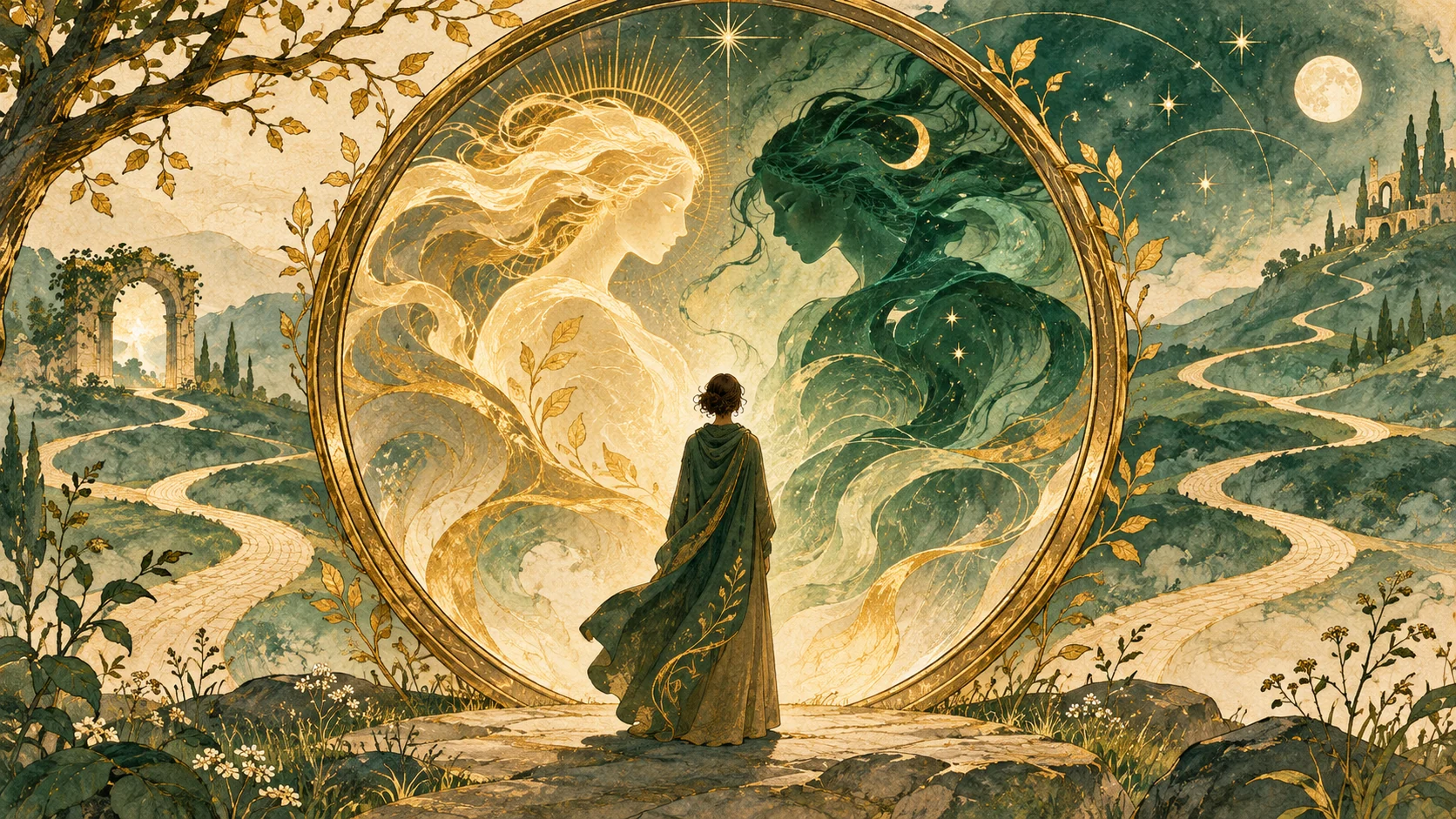
Manly P. Hall gives this inward change an alchemical image. In The Secret Teachings of All Ages (1928), he interprets base metals becoming gold as ignorance becoming wisdom through learning. 14 This is the heart of alchemy in storytelling: the character becomes the material being transformed. The treasure matters because of the understanding earned on the way to it.

That movement also runs through James Cameron’s Titanic. Jack becomes a catalyst for Rose’s fulfilment, while the final photographs show the life she went on to build. 15 Her transformation continues beyond the catastrophe, through choices that loosen an imposed identity. Doctor Strange follows a different passage towards responsibility: seeking his former life, Stephen must confront his arrogance and learn to use power beyond his own needs. 16
In each story, the outer journey gives inner change a visible shape. This invites a literary comparison with “as above, so below,” the shorthand for the Emerald Tablet’s correspondence between higher and lower realms. 17 Correspondence concerns relationships across levels; it need not imply opposing forces. Similarly, an external adventure can reflect a changing understanding within.
In Cameron’s Avatar (2009), Neytiri teaches Jake Sully about Pandora’s interconnected world. As he learns, his loyalties change, and he protects the people he once helped endanger. 18 Belonging becomes a responsibility. The transformation involves recognising that his own story unfolds within other lives.
Even the colours through which we describe these journeys need context. Black and white carry no universal moral verdict: in ancient Egypt, black could signify fertility and rebirth through its association with rich Nile soil. 19 As Oz and Wicked also reveal, appearances can steer our judgement before we understand a person. The gradient between apparent extremes can reveal complexity, while the meaning of a choice still depends on what it does.
When one person’s will meets another’s
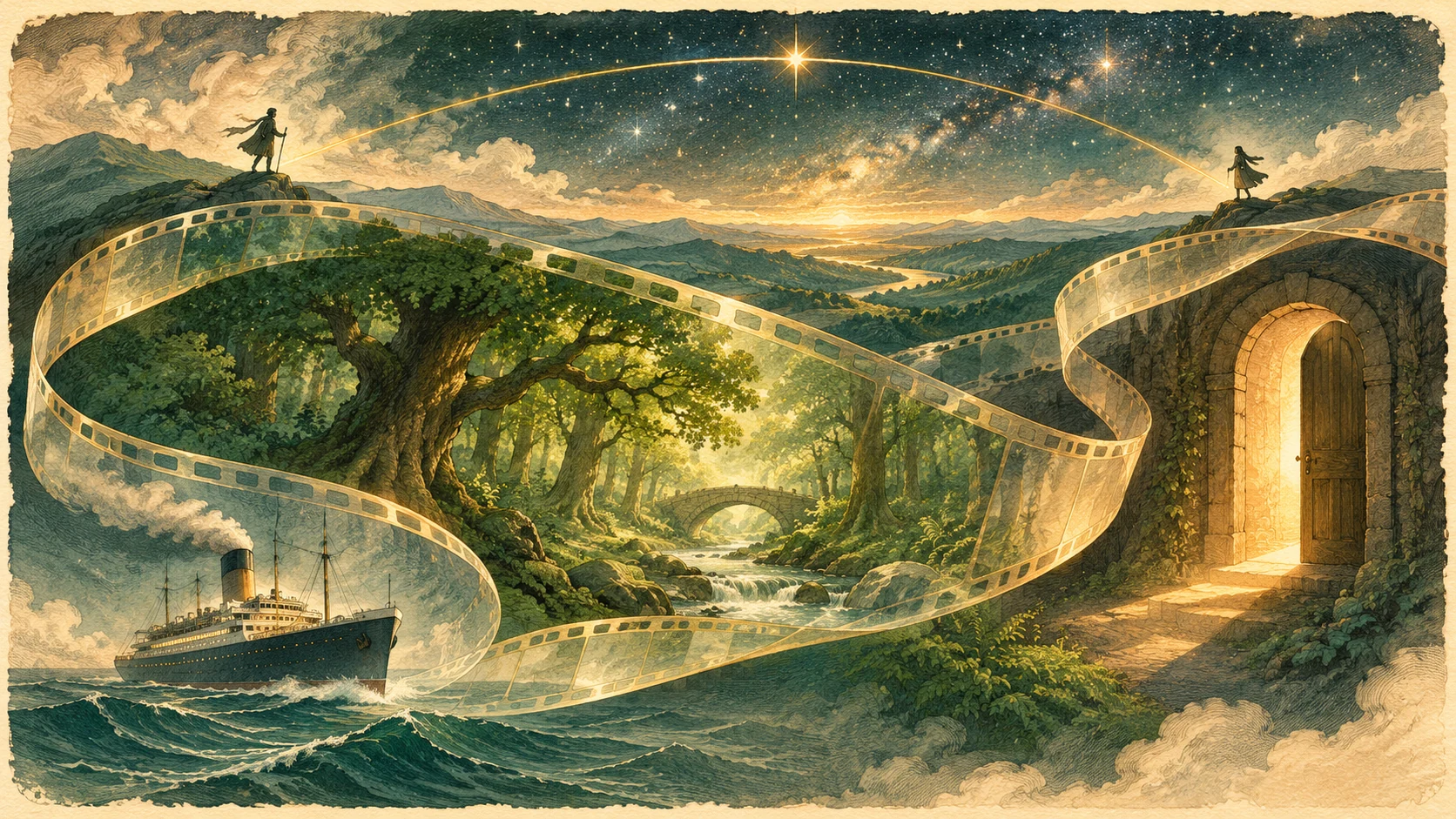
WandaVision brings that question into focus. Wanda’s grief creates a world shaped by familiar television stories, but other people become trapped inside it. Her refuge costs them their freedom. 20 Understanding her pain makes the conflict richer without making its consequences disappear. What happens when one person’s desired narrative becomes everyone else’s compulsory reality?
The Wiccan Rede offers an ethical touchstone: “An it harm none, do what ye will.” Doreen Valiente publicly expressed it in 1964; it is distinct from Crowley’s Thelemic “Do what thou wilt.” 21,2 It invites us to consider whose freedom an action respects and who bears its consequences. Intention alone cannot answer that question: harm can also arise through negligence or effects someone failed to foresee.
The Lord of the Rings makes the limits of individual will central to its ending. Frodo cannot finally surrender the Ring, yet his earlier mercy towards Gollum helps make its destruction possible. Tolkien’s explanation stresses endurance, human limits and mercy. 22 Compassion matters beyond what any one character can predict or control.
The same attention to another life carries Project Hail Mary. Ryland Grace and Rocky seek to save their respective worlds, and their friendship gives the scientific quest its emotional centre. 23 Difference becomes a reason to learn. Here, transformation grows through cooperation, reminding us that conflict is one route to change among many.
Together, these stories make the “gold” more precise. It is the understanding that survives the ordeal and becomes visible in a choice: hope sustained, power questioned, freedom claimed, mercy extended. Opposing forces may create the tension, but what emerges depends on how someone responds.
For writers, that is where a symbol earns its place. Connect it to a character’s contradictions, let its meaning change, and allow the final choice to reveal what the journey has taught them. A crown, a ring or a repeated phrase carries weight because of the life gathered around it.
We eventually close the book or leave the cinema. The imagined world falls away, but something of the encounter may remain: a clearer question, a deeper recognition, a possibility we had missed. The gold is what we carry back—and how we choose to live with it.
Sources and further reading
View sources and reading notes (23)
- Aleister Crowley — Magick in Theory and Practice, introduction and theorems — Definition and the book-writing example.
- Aleister Crowley — Duty — True Will, self-knowledge and purpose; primary text hosted by O.T.O.
- Wizarding World — The hardest wizarding world spells — Official franchise account of concentration, emotional memory and the Patronus Charm.
- Academy of Motion Picture Arts and Sciences — The Shawshank Redemption — Anniversary screening with Frank Darabont, Tim Robbins and Morgan Freeman: hope, friendship, escape and filming the sewage-pipe scene.
- MorgueOfficial — video discussed — Transcript accessed through YouTube on 17 November 2026. Key passages: 7:00–13:22; 18:01–20:03; 31:35–34:36; 38:43–41:43.
- Pistis Sophia, chapter 136 — G. R. S. Mead translation — Primary passage: linen garments, the four corners and the interpretation of IAO.
- Caroline Crews — Pistis Sophia, NASSCAL e-Clavis — Scholarly context: surviving manuscript, composite text and post-resurrection dialogue.
- Brigit Soubrouillard — Image, IAAP — Jung’s archetypes and their images; the influence of personal experience and culture.
- Natalia Serebrennikova — The Shadow, IAAP — The shadow includes rejected or unacknowledged qualities, both positive and negative.
- George Hogenson — Analytical Psychology, IAAP — Individuation, awareness and integration in Jungian analytical psychology.
- Emilija Kiehl — The Transcendent Function, IAAP — Jung’s account of psychic change: conscious and unconscious positions can produce a new attitude; opposition, complementarity and connection.
- StarWars.com — Luke Skywalker, official Databank — Return of the Jedi: Luke’s anger, refusal to kill his father, and compassion prompting Vader’s final choice.
- Aleister Crowley — The Formula of I.A.O., chapter V — Primary text: Isis, Apophis, Osiris and transformation.
- Manly P. Hall — The Secret Teachings of All Ages, The Theory and Practice of Alchemy — Primary text: the passage beginning “Through art” interprets base metals as ignorance and gold as wisdom gained through learning.
- Zehra Phelan — James Cameron and Jon Landau on Titanic’s 25th anniversary, HeyUGuys — Cameron’s press discussion: Rose’s fulfilment, Jack as catalyst, and the photographs showing her subsequent life.
- Zach Johnson — Doctor Strange’s Maddening Journey Through the MCU, D23 — Official Disney account of Strange’s study, arrogance and developing responsibilities.
- The Emerald Tablet of Hermes — English translation — Primary text in translation: the correspondence between what is above and below; applied here as a storytelling analogy.
- Avatar — Jake Sully, official Pandorapedia — Neytiri’s teaching, Jake’s changing allegiances and his defence of the Na’vi in the 2009 film.
- The Metropolitan Museum of Art — Tomb of Ameneminet facsimile, object 30.4.124 — Museum interpretation: black could evoke rebirth and regeneration through its association with fertile Nile soil.
- Alan Sepinwall — Matt Shakman on the Making of WandaVision, Rolling Stone — Interview with the series director on sitcom storytelling, grief and the harm to Westview residents.
- Ethan Doyle White — A Historical Analysis of the Wiccan Rede (2015) — Research abstract consulted: the Rede’s Wiccan context, Valiente’s public statement in October 1964, Crowley’s influence and varied reception. Magic, Ritual, and Witchcraft 10(2), 142–171; DOI 10.1353/mrw.2015.0032.
- J. R. R. Tolkien — Letter to Eileen Elgar, September 1963, Tolkien Estate — Tolkien on Frodo’s inability to surrender the Ring, endurance, limitations and mercy towards Gollum.
- Directors Guild of America — Phil Lord and Christopher Miller discuss Project Hail Mary — Directors’ Q&A on 19 April 2026: Ryland Grace and Rocky’s missions, friendship and the relationship at the film’s heart.