From a name on a character sheet to a world of my own.
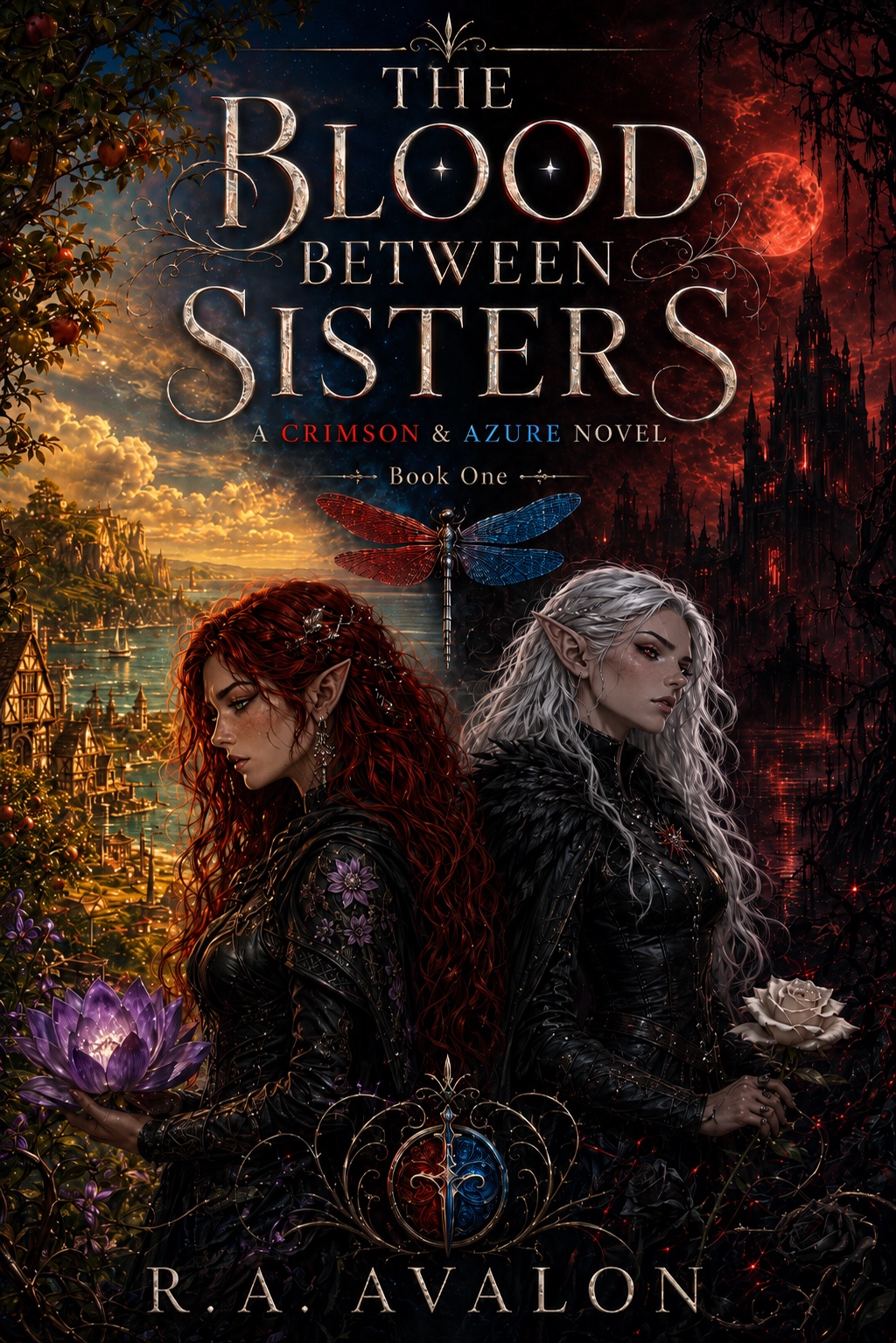
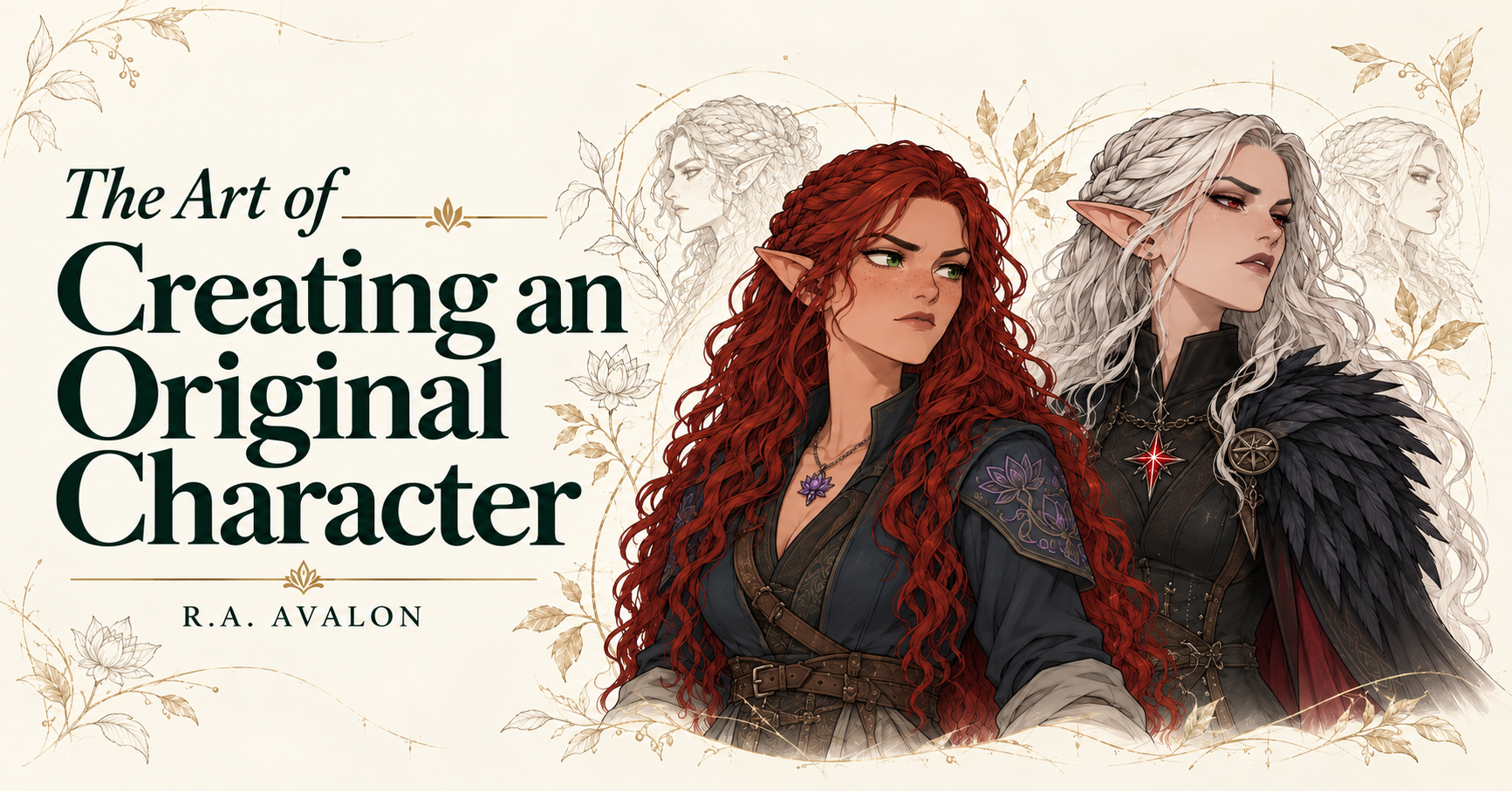
Revana appeared only briefly at our Dungeons & Dragons table. She went on to become one of the central characters in my Dragonfly Twins novels.
She began as the partly vampiric half-sister of Sirelia, the rogue I played with colleagues. The possibilities around their relationship kept growing. Eventually, those two characters helped open the door to a fictional universe of my own.
That journey raises a question I keep returning to: what turns an original character into someone who can carry a story?
Through online roleplay, tabletop adventures and writing, I have found that the answer emerges gradually. A name gives me somewhere to begin. The choices that follow give me a reason to keep writing.
Start With a Name, Then Ask Why
As I explored in A Name Before a Face, names often arrive early in my creative process. Their sound, associations and symbolism suggest possibilities before I know the person who will carry them. Revana’s name deliberately echoes Revan, reflecting my interest in identity and moral ambiguity.
Then I need a motive.
Vinita, my fugitive Scion from Zakuul in Star Wars: The Old Republic (SWTOR), already had a situation that invited questions. What was she running from? What might make her feel safe enough to stop? Those are questions to explore, and their answers would shape very different stories.
For anyone creating an original character, this is a useful starting point: give them something they want, something that complicates it, and a reason the outcome matters. Even a quiet desire can sustain a story when pursuing it has consequences.
Turn Inspiration Into a Point of View
My characters carry traces of the stories I love. The interesting work happens when those influences meet different circumstances.
Yaira Aviriia, my Echani Sith archaeologist, began with a blend of Lara Croft and Doctor Aphra. That combination gave me curiosity, adventure and room for trouble. Later encounters with a Jedi who believed she could change took her story somewhere that initial comparison could not predict.
Lord Rokizi grew up within a traditionalist Sith household and eventually chose a master her family rejected. Her independence developed through that conflict. Writing her meant considering beliefs very different from my own and allowing encounters to challenge what she had learned to accept.
I find originality in that specificity: what a person notices, excuses, protects or refuses to understand. Two characters can share an archetype and still make entirely different decisions when loyalty becomes inconvenient.
A contradiction gives me somewhere to work. Someone may value freedom while trying to control the people she loves. A strength can become a problem when the circumstances change. I want to understand why a choice made sense to the character, including when it was a mistake.
Let Roleplay Change the Plan
Lenoria Aubrey was my Final Fantasy XIV (FFXIV) character: an Ishgardian weaver who practised archery as a hobby and set out to find her missing brother. Her search took an unexpected detour when she ended up working as a bartender at the Masked Winery. I drew inspiration for Lenoria from Lenore in Castlevania, a series I watched on the recommendation of the player who portrayed her brother.
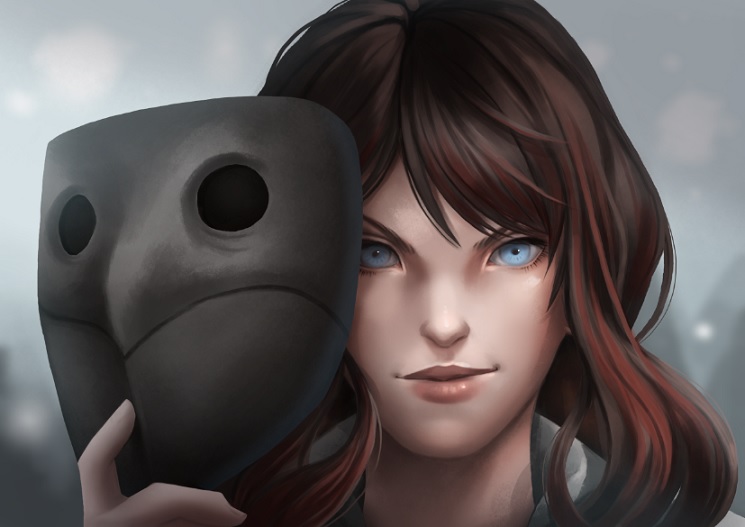
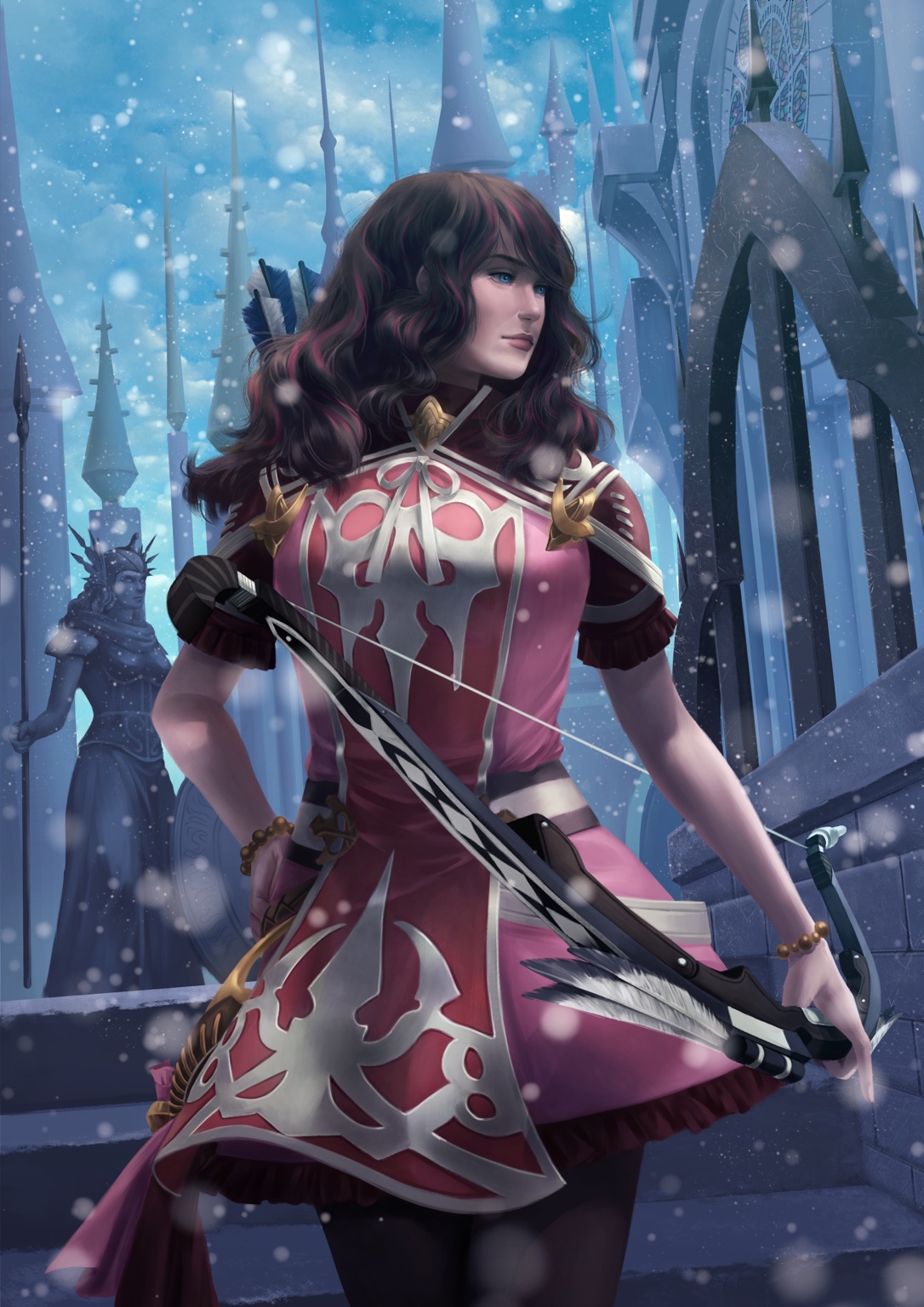
That unexpected turn captures something I love about roleplay. You arrive with an intention, then encounters with other people create possibilities you could never have planned alone.
Jaliqai Dalamiq began as a curious scholar. Within the Northern Lights, she found herself leading while privately doubting her ability to do so. Caring for injured animals put her studies into practice. Those experiences gave her development a specific shape: knowledge becoming responsibility, with more still to learn.
In Dungeons & Dragons, I also created Mayis, my tiefling rogue, and Skyla, my Sky Genasi archer. Each offered a different starting point for collaborative storytelling.
Leaving room for other players matters. Their choices need to affect the story too. Listening, adapting and accepting an unexpected outcome can reveal more about a character than another page of backstory.
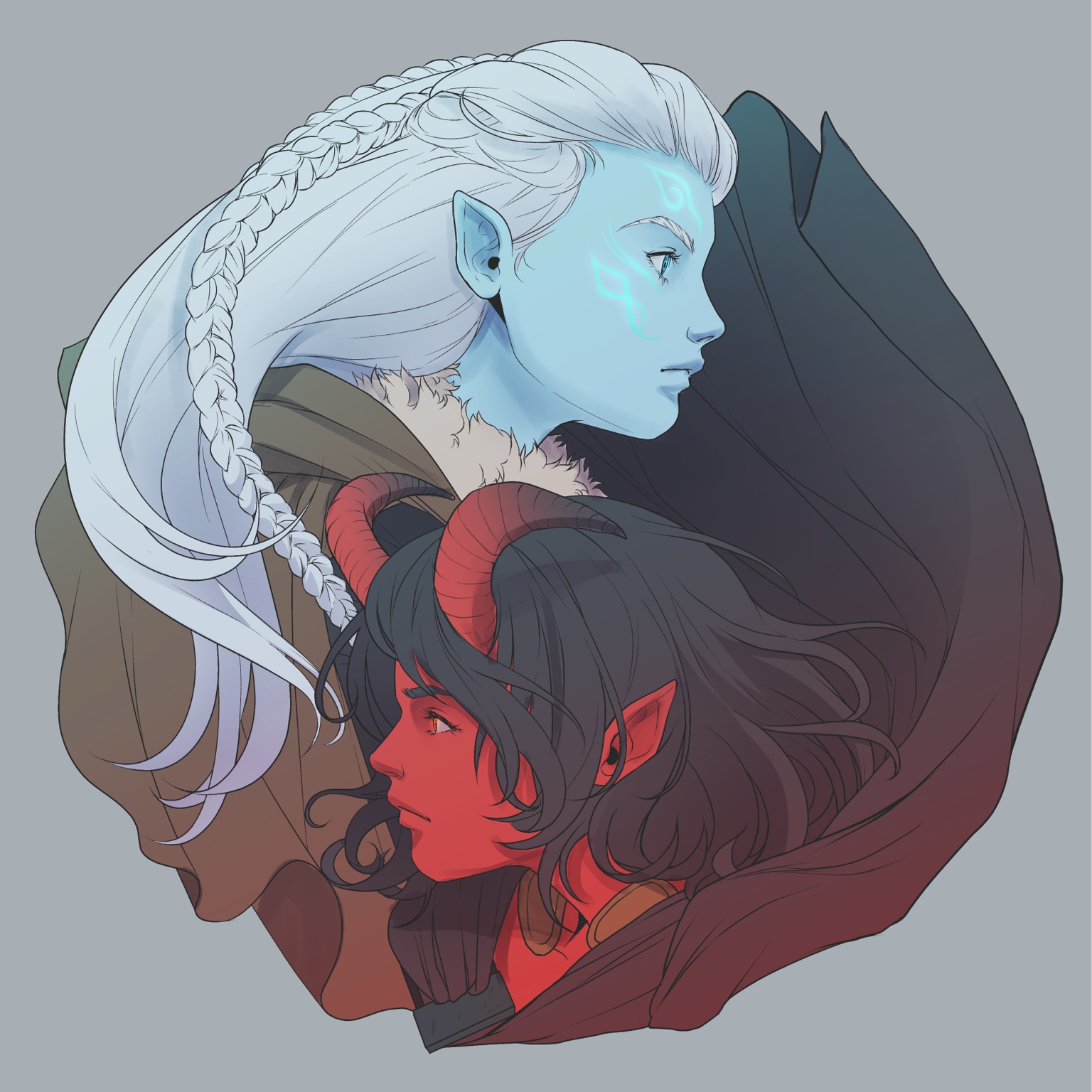
Give the Character a Visual Language
I also love making character moodboards. There is a particular joy in seeing a person who existed in fragments begin to look recognisable.
AI-assisted visual tools have become part of that exploration for me. They help me experiment with clothing, expressions, colours and settings, then decide what actually belongs to the character.
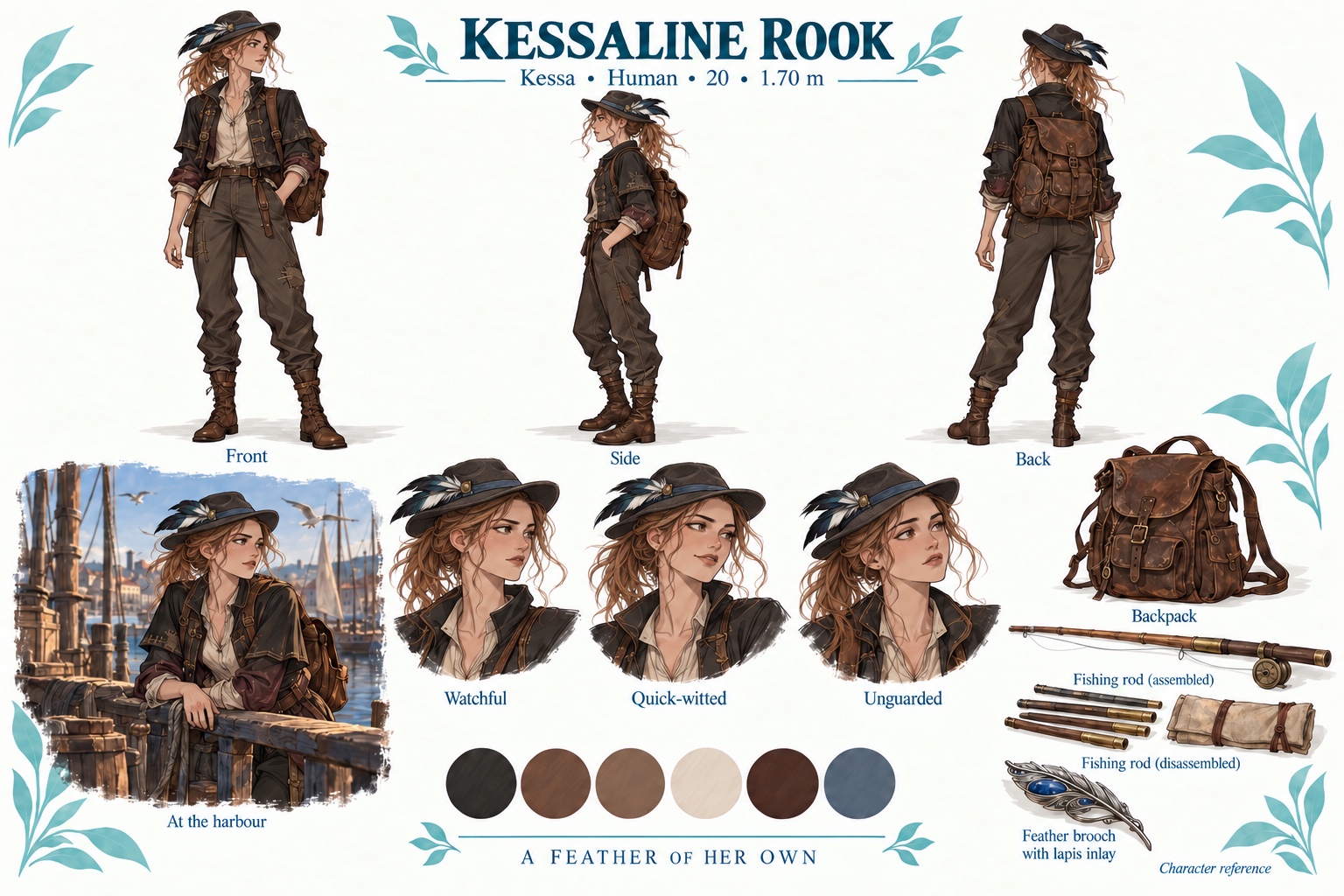
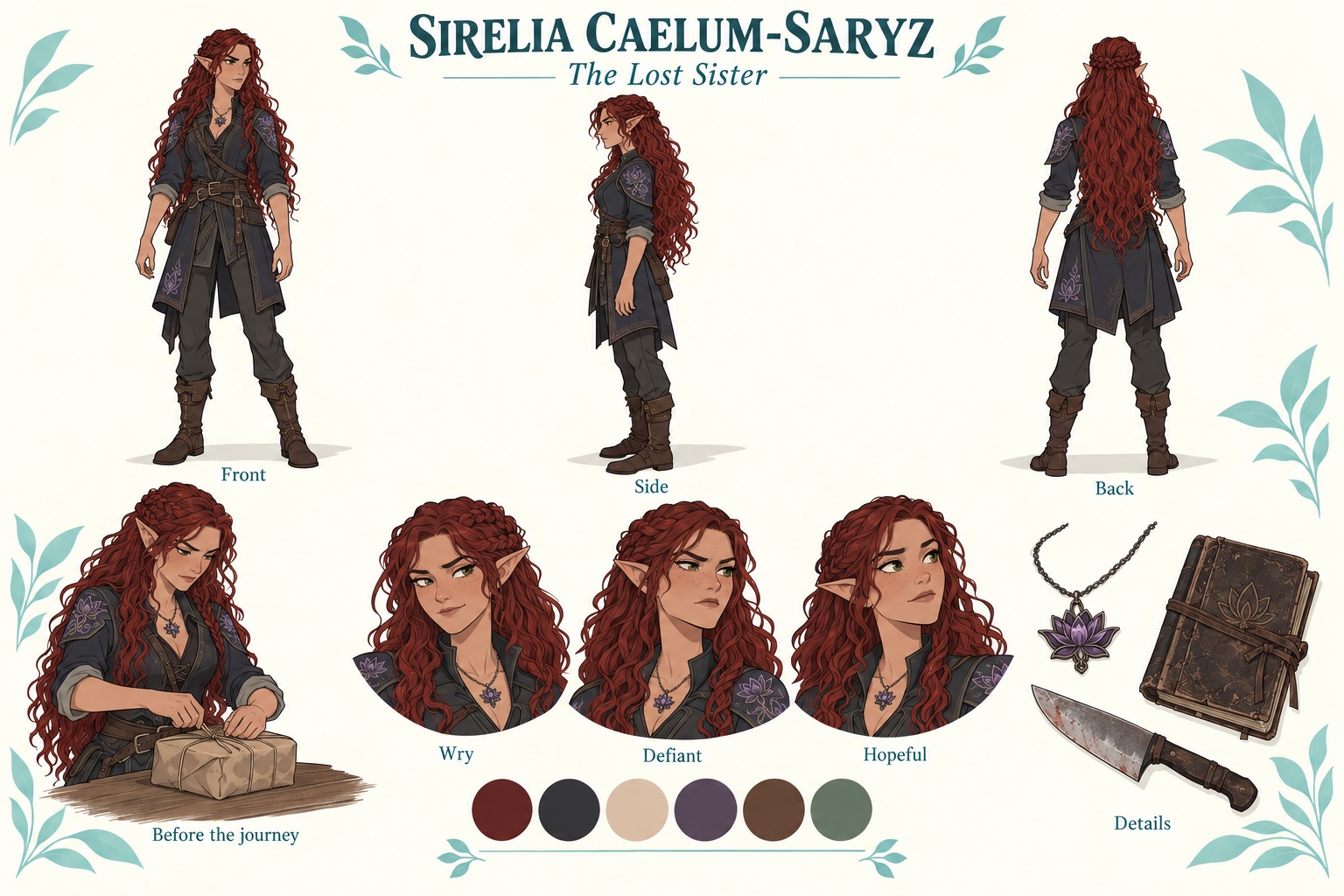
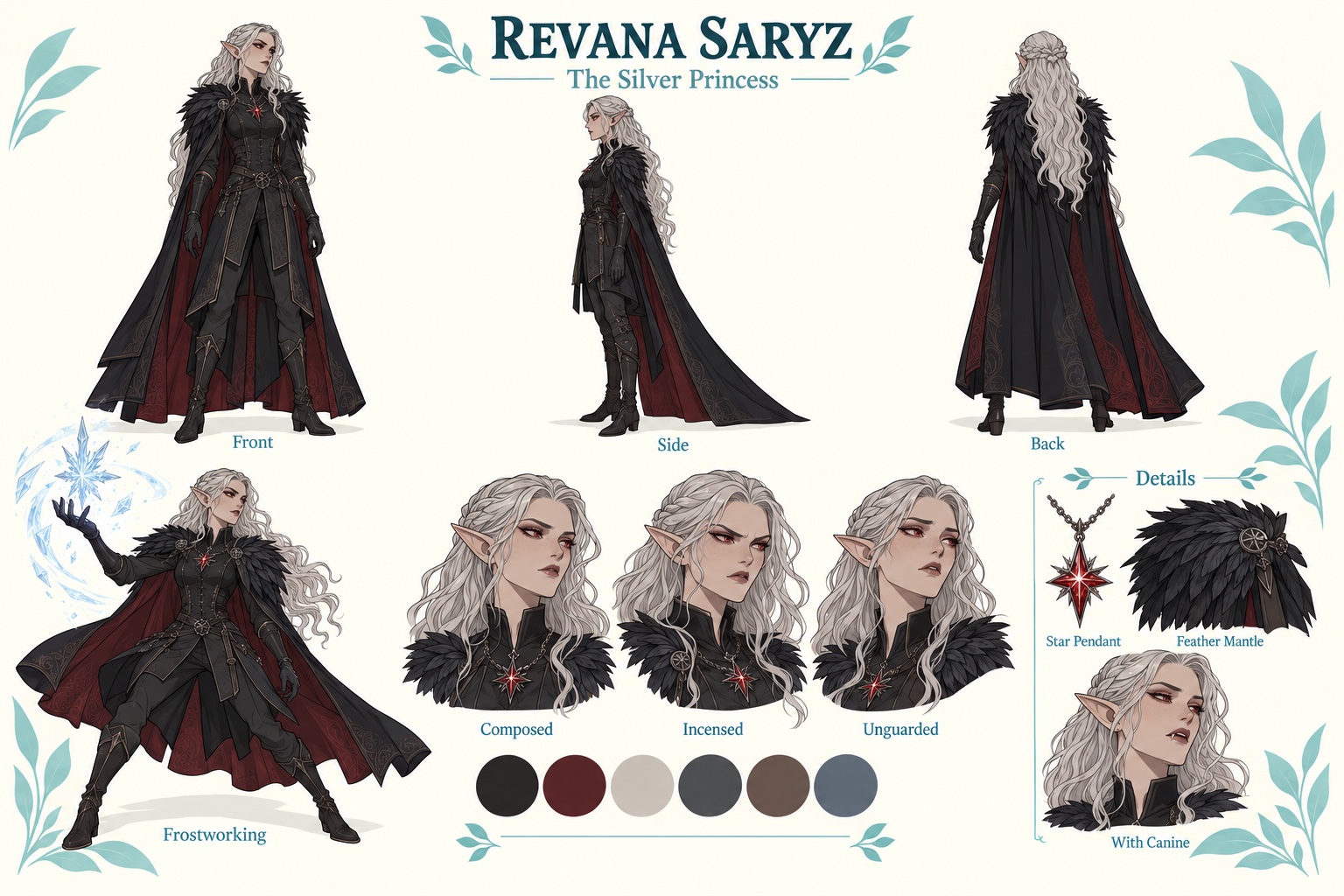
Sirelia and Revana’s reference sheets bring those choices together. A pendant, a practical coat or a guarded expression can become the beginning of a question: why does she keep that object? What changes when she feels safe?
The image gives me something to investigate. I still need to find the voice, test the motives and decide which details remain consistent. A moodboard becomes especially useful when it makes me want to write a scene.
Build a World That Gives Them Room to Grow
Eventually, that curiosity brought me back to Sirelia, or “Si”, and Revana.
What began around D&D with colleagues developed into the Dragonfly Twins. Revana’s brief appearance at the table became the beginning of a much larger role alongside Sirelia. Their relationship had more possibilities than its original context could contain.
Building my own fictional universe gave me room to develop those possibilities: histories, cultures, institutions and conflicts that could grow around the characters. It also opened space for countless further stories and people whose lives intersect in unexpected ways.
Creating that world means asking fresh questions about where power comes from, what cultures value and how ordinary people live. The influences remain part of my creative history, while the characters develop through relationships and consequences specific to their own world.
That freedom comes with a satisfying responsibility. If I establish a rule, a relationship or a painful consequence, the next chapter needs to remember it. A world becomes convincing through what its inhabitants must live with.
This connects with my interest in alchemy in storytelling: transformation as a creative metaphor. A character enters an experience carrying one understanding of herself. The pressure of what happens may force her to reconsider it. The change has to be earned through the story.

Give Them a Choice Worth Following
Looking back, my own journey followed a similar movement. I entered worlds imagined by others, created people within them, learned through shared stories, and eventually began building a world of my own.
As I wrote in The Power of Storytelling, becoming a storyteller changed how I engaged with the stories that inspired me.
It also sharpened the questions I ask. What does someone believe? What are they overlooking? What might change their mind? These questions keep character development interesting, and they remind me to stay curious about perspectives beyond my own.
If you are staring at an empty character sheet, begin small: a desire, a contradiction and a situation that makes both matter. You can discover the larger history as you write.
Revana’s time at the table was brief. Following the possibilities around her helped me find a much larger story.
The art of creating an original character is giving an idea enough depth to make a meaningful choice—and remaining curious about who that choice allows them to become.
— R.A. Avalon
From the character collection