
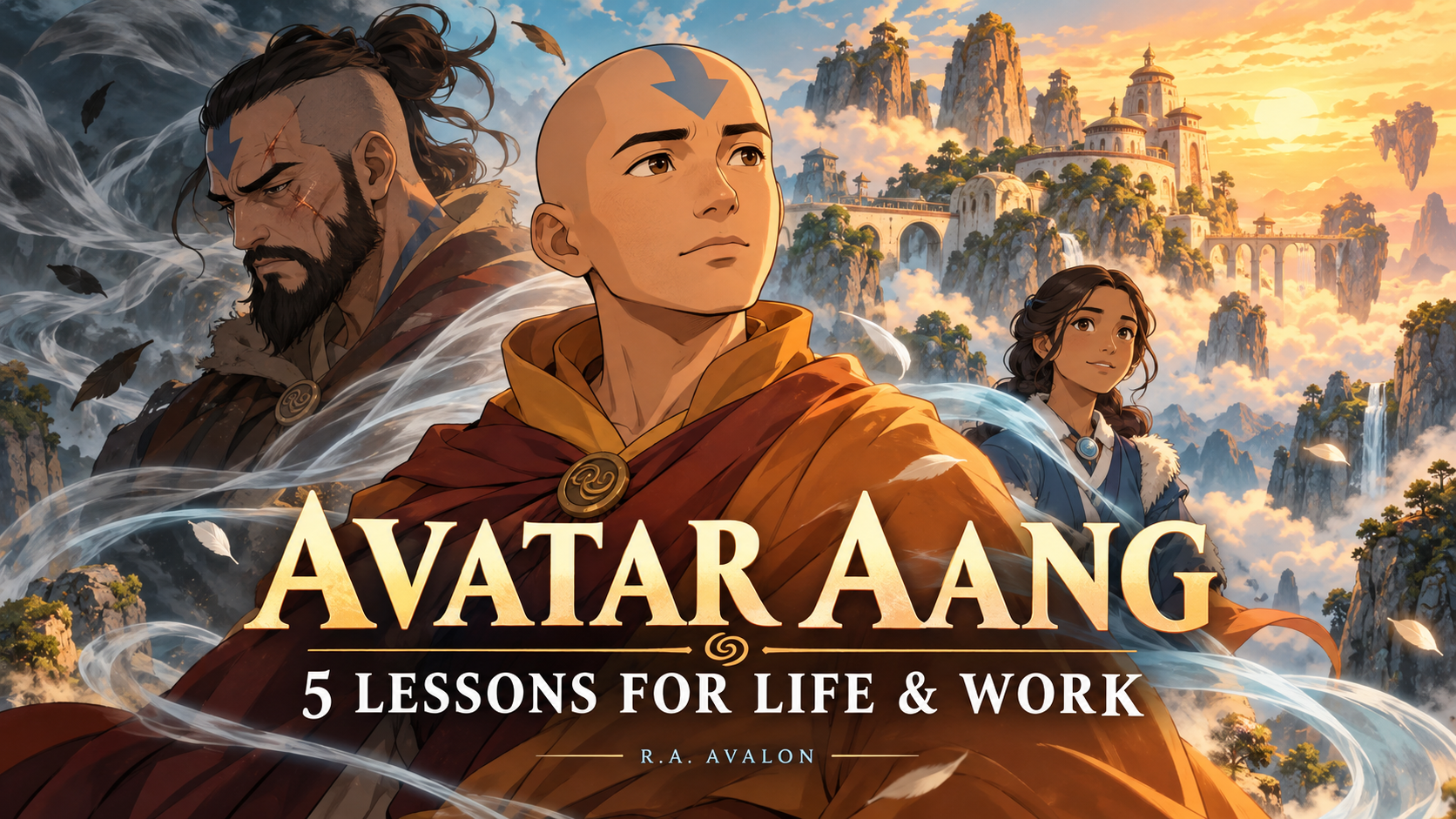
Contains major spoilers for Avatar Aang: The Last Airbender.
Aang has helped end a war, but he still cannot bring his people home. The animated film Avatar Aang: The Last Airbender builds its emotional conflict around that unfinished loss: what happens when the desire to protect something precious starts threatening the values that made it precious?
An ancient power offers hope of restoring his culture. As Aang searches for it, Tagah offers a connection to his people alongside a very different vision of their future.2
In Cinema Therapy’s discussion, therapist Jonathan Decker, filmmaker Alan Seawright and guest Bryson from Haminations explore that question through Aang, Katara and Tagah. Their analysis reveals five lessons about grief, trust and responsibility, with implications for our workplaces, digital communities and wider society.1
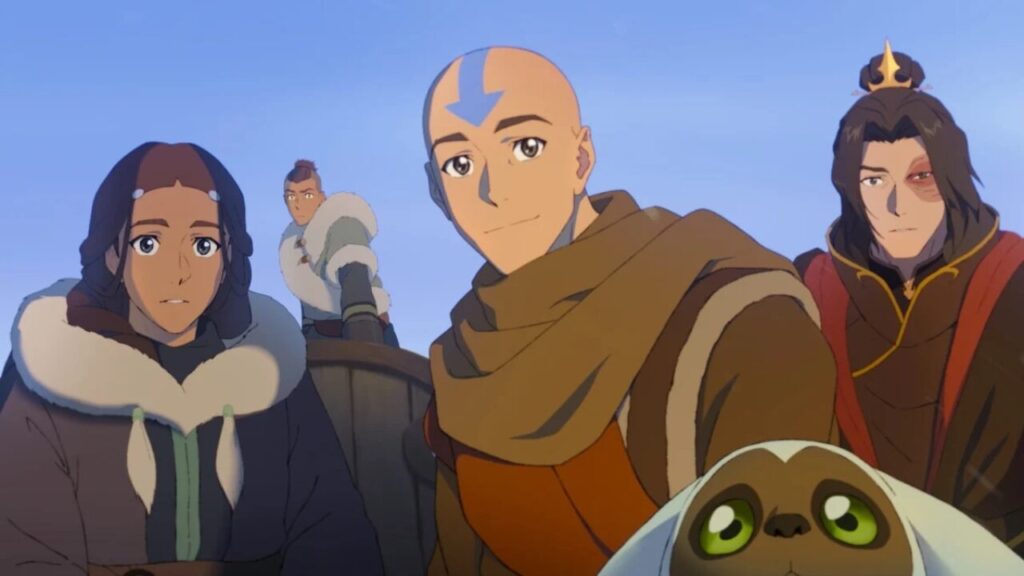
Film still: Paramount+ · via CGMagazine.
1. Aang’s grief: saving the world does not end the struggle
Katara reminds Aang that the different nations can live together because of what he helped build. His response returns to the absence beneath that achievement: his own people are missing.
Decker identifies the tension between Aang’s responsibilities as the Avatar and his longing as the last airbender. Everyone needs something from him. He also has needs that serving everyone else cannot resolve.
This is a strong foundation for a sequel. Director Lauren Montgomery explained that earlier versions explored different antagonists before the team centred the story on Aang’s relationship with his lost culture. Becoming the Avatar had kept him moving; being the last airbender gives him something painful to face.3
The workplace lesson follows directly from that scene: someone can remain capable, generous and productive while carrying something difficult. A completed project or resolved incident tells us little about how the people involved are doing afterwards. Leaders can make room for that conversation without requiring anyone to disclose private experiences.
2. Aang and Tagah: shared pain, different choices
Tagah offers Aang something his friends cannot fully provide: recognition from another airbender who understands catastrophic cultural loss.
Cinema Therapy highlights why that connection matters. Aang has people who love him, yet part of his experience remains profoundly lonely. Someone who seems to understand that loneliness can become unusually persuasive.
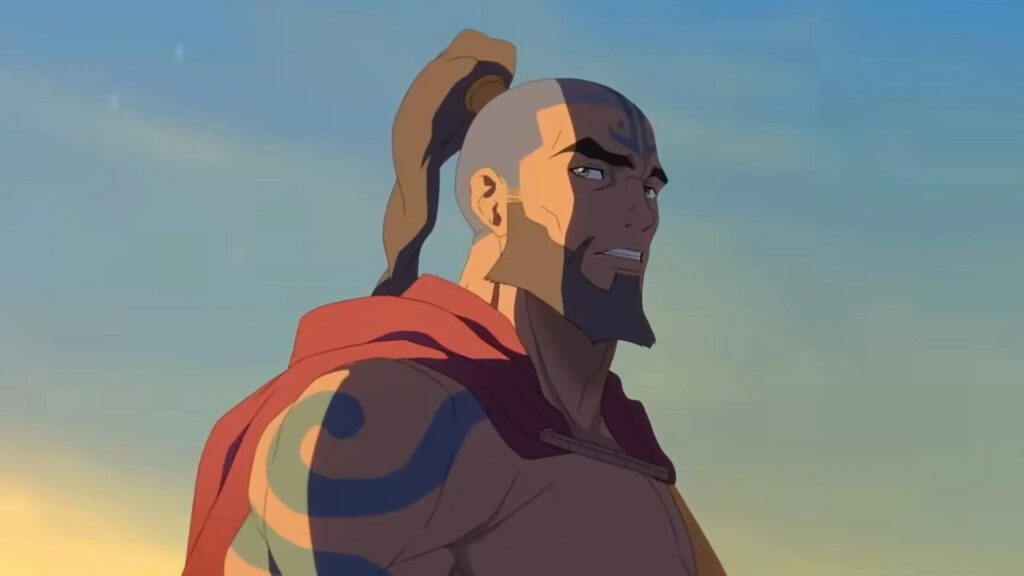
The writers make Tagah a mirror for Aang. Both want their people to have a future. Tagah’s answer moves towards domination and exclusion; Aang wants a world where his friends and their different nations belong together.
The conflict becomes personal because Tagah challenges Aang’s deepest longing. Defeating him means examining a temptation within Aang himself. That is what gives a dramatic foil its force: the antagonist makes the hero’s possible choices visible.
Film still: Paramount+ · via CGMagazine.
For society, this raises a difficult question about shared identity. Can we preserve a community’s history while allowing relationships beyond its boundaries? Tagah turns suffering into a reason to distrust whole peoples. Aang’s friendships show another possibility.
The film presents two particular responses to loss. It does not establish a rule about trauma: people’s circumstances, relationships and access to support also shape what becomes possible.
3. Katara and Team Avatar: support that respects the person
One of Decker’s central observations concerns the people around Aang. Katara, Sokka, Toph and Zuko give him relationships through which he can remain connected to the world.
Katara reassures him while acknowledging his responsibilities. She values the person who holds those responsibilities. Tagah increasingly values the parts of Aang that can serve his own vision.
That contrast offers a practical way to think about trust. Does someone’s support leave room for our individuality, other relationships and disagreement? What happens when our choices no longer match what they want?
At work, appreciation becomes meaningful through behaviour: listening to concerns, respecting limits and responding fairly when someone challenges a decision. Research on psychological safety similarly connects the ability to take interpersonal risks with team learning.4
In an online community, the equivalent test is whether members can ask a sincere question without being treated as enemies. Aang’s circle makes room for different backgrounds. Its strength comes partly from that difference.

Film still: Paramount+ · via CGMagazine.
4. Tagah’s certainty: why curiosity matters
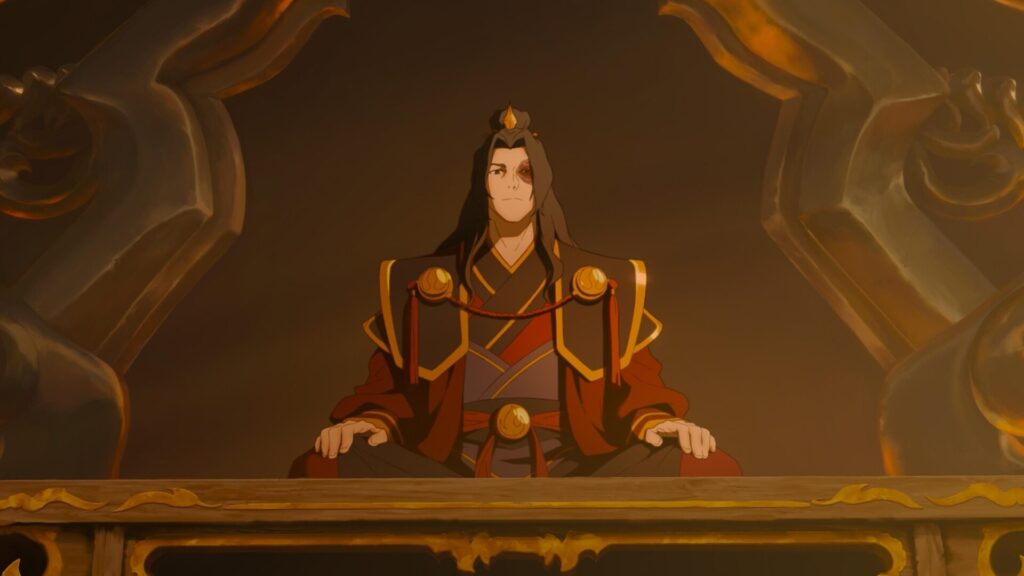
When Tagah questions Aang’s friendship with the Fire Lord, Aang explains what Zuko actually did: he turned against his father and helped end the war. Tagah remains focused on the crown and the element associated with his enemies.
Decker observes that Tagah has already made up his mind. He dismisses the possibility represented by Republic City without exploring the place Aang and his friends have built.
Through this exchange, Cinema Therapy makes confirmation bias tangible: information that fits Tagah’s existing story is welcome; information that challenges it struggles to matter.
Digital culture gives us a recognisable parallel. A screenshot or a hostile clip can seem to confirm everything we believe about another group. Research has also found that positive social feedback can encourage further expressions of online outrage.6 The film’s question becomes useful before sharing: have I explored the context, or have I found another reason to stop listening?
At work, Aang’s approach suggests asking what happened and what someone is trying to achieve before assigning motives. Curiosity creates an opportunity to understand the problem well enough to address it.
Film still: Paramount+ · via CGMagazine.
5. Aang’s anger and forgiveness: choosing what survives
The climax tests Aang’s own convictions. His anger is understandable, but his growing destructiveness threatens the values he wants to preserve.
Decker compares anger to a smoke alarm. It can alert us to something wrong, but the alarm itself cannot resolve the situation. Aang must recognise what his anger is pushing him towards and decide how to respond.
That distinction matters during workplace conflict and public debate. A legitimate grievance still leaves us responsible for how we treat others. Repair may involve an apology, a changed decision or addressing conditions that allowed harm to continue.
The ending also addresses Aang’s guilt. Bryson points out that Aang was a child carrying an enormous responsibility. Judging that child entirely through his adult capabilities overlooks what he could actually understand and control.
In a review of any failure, that is a valuable question: what did people know, what authority did they have, and what options were realistically available? Fair accountability begins with those circumstances.
The values that survive the battle
Aang finally recognises that restoring his people cannot justify betraying what they stood for. Their values can continue through the way he lives and the relationships he builds.
That gives the story its resolution. The quest forces a choice, and the choice answers the question beneath the action.
For our teams, online communities and society, the same question remains: are we carrying our values into the way we defend them? Cinema Therapy’s reading of Aang gives us a reason to examine our answer.
Sources and reading
- Cinema Therapy’s discussion of Avatar Aang: The Last Airbender. Discussion referenced through the supplied video transcript.
- Paramount Press Express: official film synopsis, 7 July 2026.
- Ridge Harripersad, CGMagazine: interview with director Lauren Montgomery, 10 October 2026. Supports the account of story revisions and the film’s emotional focus.
- Amy Edmondson, Psychological Safety and Learning Behavior in Work Teams (1999), and Managing the Risk of Learning: Psychological Safety in Work Teams (2002). Workplace examples and literary interpretations in this article are the author’s applications.
- William J. Brady and colleagues, How Social Learning Amplifies Moral Outrage Expression in Online Social Networks, Science Advances (2021). Distinguishes expressed outrage from assumptions about a person’s internal feelings.