
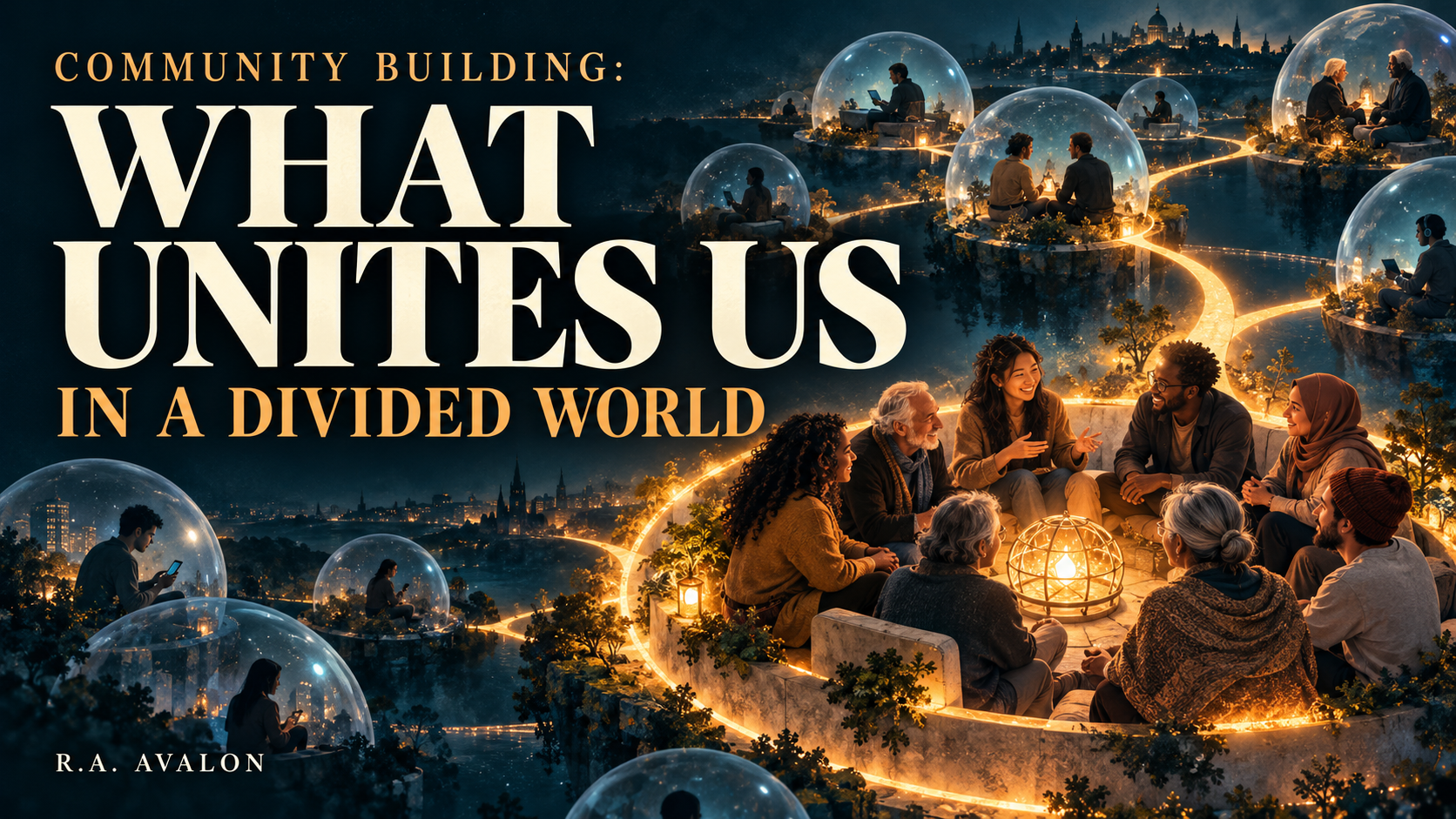
You build a place for people to belong. Then, one day, you have to ask someone to leave.
Somewhere between those moments, community building becomes a lesson in leadership. Whether you manage a team, grow a brand or organise volunteers, the question remains: what unites us?
It feels urgent in a world where people seem to inhabit separate realities. Personalised feeds can reinforce familiar perspectives, while comfort draws us towards people who already agree with us. Our corner of the internet can start to feel like the whole world.
At Cibap, I learned how powerful a community could be around a brand: a company, a person or even an article. Social media helps people discover you. Communication builds the relationship that follows. Choosing the right channel, tone and moment matters.
I carried that lesson into Aviriia, my identity as an online creator. I shared my work, made room for conversation and noticed what people connected with. Gradually, people found familiar names and shared interests among each other. Watching someone find their people in a space you helped create is incredibly rewarding.
That feeling comes with responsibility.
As a guild officer in Star Wars: The Old Republic, including in the largest guild on our EU server, I managed the PvP side: players competing against other players. Keeping it alive meant organising events, moderating disagreements and understanding different needs. Some wanted to win. Others wanted to learn or enjoy company after a difficult day.
The game united us. Making room for those different motivations helped us remain a community. When participation is voluntary, people can simply stop showing up. Their time and trust matter.
Friendships formed, but so did cliques. A busy chat could look welcoming while newcomers struggled to get an invitation or an answer. I learned to notice who kept hanging back. Comfort for established members could become a barrier for everyone else.
Communication needed judgement. A public post could attract newcomers; a Discord announcement could organise an event. A sensitive disagreement often needed a private conversation. The wrong setting could turn a manageable problem into a public confrontation.
Sometimes I became the “evil” person enforcing the rules. One member repeatedly violated our Discord policy, harassed others and engaged in bullying. I had to remove them. Allowing that behaviour would have meant asking everyone else to endure it.
I was younger than many people involved, but some called me “Rosa with the iron fist” for a reason.
Still, people sometimes had good reasons for challenging a rule. We listened and changed rules that no longer served the community. Responsibility meant holding boundaries while recognising when our approach needed to evolve.

Those lessons belong in the workplace too. Whose ideas get heard? Who gets invited into the conversation? Can someone question a process without being labelled difficult?
Workplaces bring together different national cultures, professional habits, social backgrounds and generations. One colleague may experience directness as honesty; another may hear disrespect. Understanding those differences takes curiosity and a willingness to explain expectations.
Generation Y, or Millennials, is already established in the workforce. Gen Z is entering and progressing through it. These labels describe broad age groups; they cannot tell us how an individual thinks. Fresh ideas and resistance to change exist at every age.[1][2]
Newcomers can bring fresh energy and questions an established team has stopped asking. Concerns about hierarchy, flexibility, fairness or purpose can unsettle people whose authority rests on familiar ways of working. Experienced colleagues can bring context that strengthens new ideas, if both sides have room to contribute.
If someone feels that hard work has brought little security or opportunity, asking them to preserve the existing system is a difficult sell. What sounds like impatience may be frustration with a promise they have never seen fulfilled.
My experience in DefCom brought these questions into a community centred on security and defence. I contributed cybersecurity and what I think of as mental security: how fear, pressure and manipulation affect safety and judgement. I also looked for people’s needs and patterns in what was missing.
Although my time in DefCom’s community leadership and on its board was brief, I hope the ideas I brought to the table inspired those who took over the work.
Looking at war and propaganda, I see fear, anger and frustrations searching for somewhere to land. I want to understand what sits beneath the first explanation. The “five whys” helps me keep asking, while remembering that a problem can have several causes.
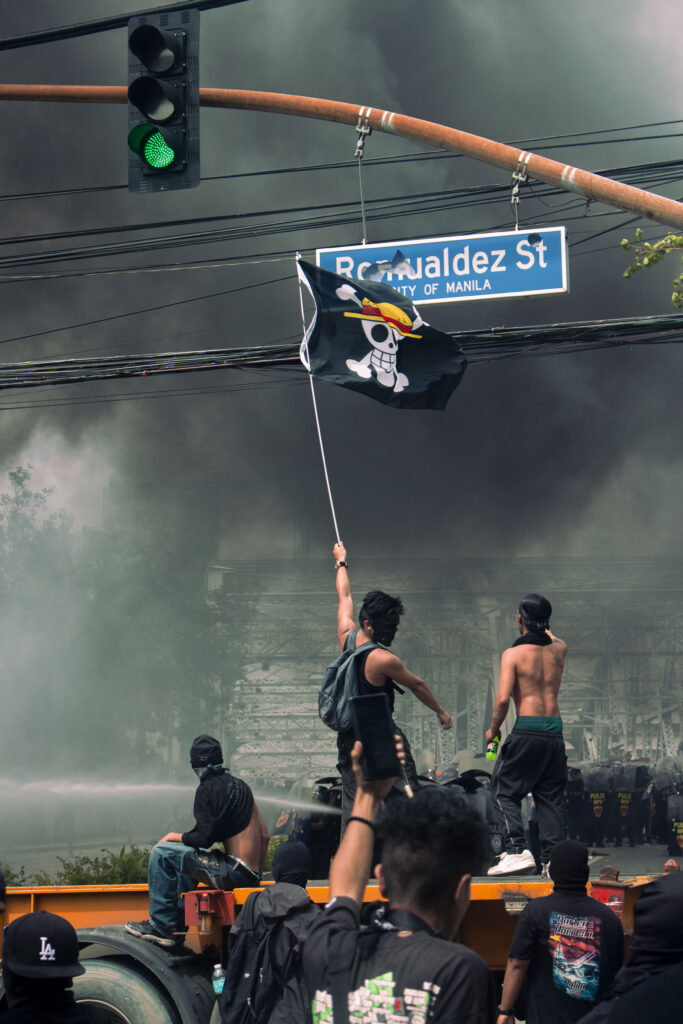

The tension between belonging and exclusion appears at both workplace and societal scales. The 2025 youth-led protests made that visible. Across countries including Indonesia, Nepal and Madagascar, demonstrators carried the straw-hat skull-and-crossbones flag from One Piece.[3]
The story follows Monkey D. Luffy and his pirate crew pursuing freedom and confronting oppressive power. Protesters connected its flag with resistance, solidarity and hopes for a fairer future. Their national demands differed, but a shared story gave them a recognisable symbol.[4]
To me, that is a striking example of digital culture becoming community: people recognising part of their struggle in a story, then recognising one another through it.
But what happened after the flags and headlines? There is no single verdict. Nepal’s March 2026 election saw a newer party surge ahead of established rivals. In Morocco, October 2026 reporting described increased health and education spending alongside persistent unemployment and frustration. Political change and better everyday lives do not necessarily arrive together.[5][6]
That leaves a harder question: are people gaining meaningful opportunities, or simply being asked to wait again?
The image I return to is the letter K. One arm rises while the other falls away. I use it as a metaphor for diverging opportunities, rather than a claim that every country follows an identical economic trajectory.
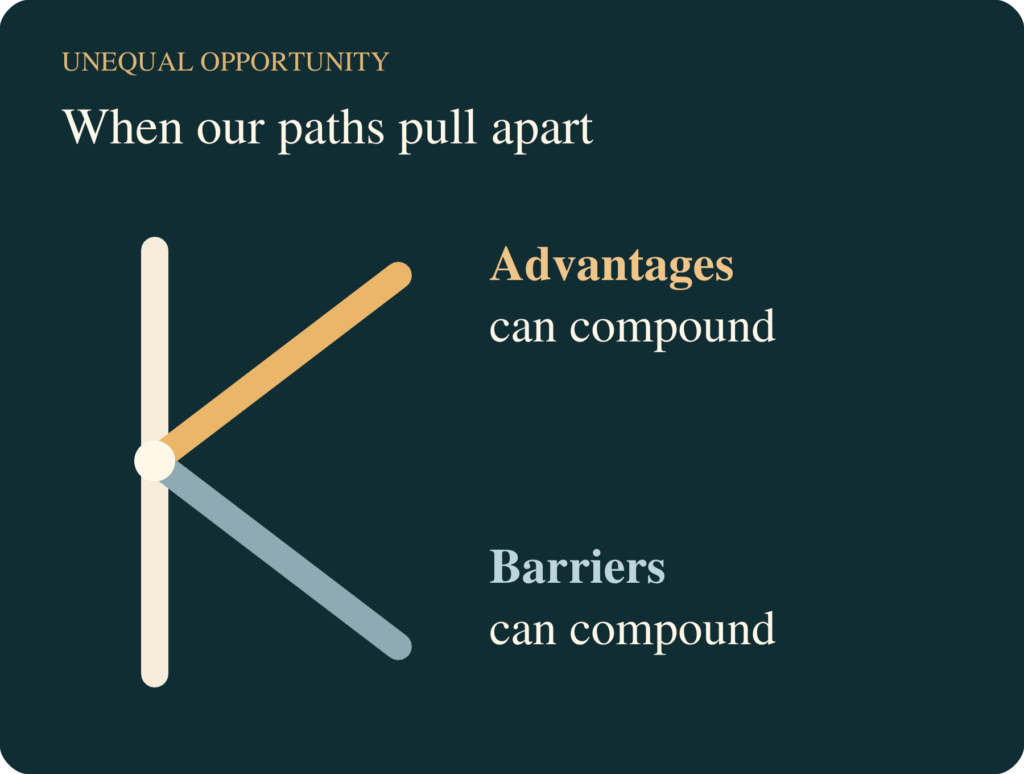
On the upper arm, skills may meet family resources, useful connections, good education and a location with opportunities. On the lower arm, equally capable people may face insecure work, expensive housing or limited access to those same advantages. OECD research identifies parental background and geography as important influences on opportunity.[7]
Advantage can reinforce itself: financial security creates room to study, relocate, recover from setbacks or take a chance. Constantly struggling to get by can narrow those choices. Eventually, people may share a society while having very different expectations of what it offers them. When we tell everyone that success is simply earned, we risk turning unequal starting points into judgements about personal worth.
How do we bring people together when their starting points keep pulling them apart?
For me, this makes community building a practical responsibility. In a workplace, that might mean transparent promotion criteria, paid learning opportunities, mentoring beyond familiar circles and taking concerns seriously. Inviting people into the room matters; so does giving them a meaningful chance to participate.
We also have to examine ourselves. Past hurt can make us quicker to expect harm. A desire for control can make change uncomfortable. Confirmation bias can make supporting evidence easier to accept than challenging evidence. Leadership gives us no exemption.
I have to ask what happened, what I am assuming and what could change my mind. Curiosity needs to travel in both directions.
That is why Yes Theory and Seek Discomfort inspire me. Their emphasis on connection beyond the familiar encourages me to step outside my comfort zone. Their work reminds me how beautiful the world can be when we give unfamiliar people and experiences a chance.[8][9]
Sometimes that begins with listening to someone outside our usual circle. Sometimes it means changing a rule, sharing an opportunity or admitting that the system works differently for someone else.
You begin by bringing people together. Along the way, you learn to listen, make difficult decisions and reconsider your assumptions. Eventually, the people who once needed welcoming begin welcoming others.
That is community building at its core: finding what connects us and creating the conditions for that connection to grow. A place where people can be themselves, encounter different perspectives and help shape what comes next.
What unites us? I want to keep building places where we can find out, together.
Sources and image credits
1. Pew Research Center: Where Millennials end and Generation Z begins
2. Pew Research Center: How we report on generations
3. ABC News: One Piece and the 2025 protests (8 November 2025)
4. National University of Singapore: One Piece flag symbolism (12 December 2025)
5. Associated Press: Nepal election results (8 March 2026)
6. Reuters: Economic recovery and continuing discontent (23 October 2026)
7. OECD: Building pathways to opportunity (2025)
Featured illustration: AI-generated for this article. Photograph credits and licence links appear with the images. The K-shaped illustration is a conceptual metaphor, not a statistical chart.