You enter the mountain expecting a monster. Somewhere beyond the darkness, gold glitters and something enormous breathes. You already know your role: defeat the dragon, claim the treasure, return changed.
But dragon mythology contains a stranger adventure. Follow its creatures across languages, continents and fictional worlds, and the enemy becomes a guardian, a companion or a teacher. What if the treasure is learning which one stands before you?
The origin of “dragon”: before the wings
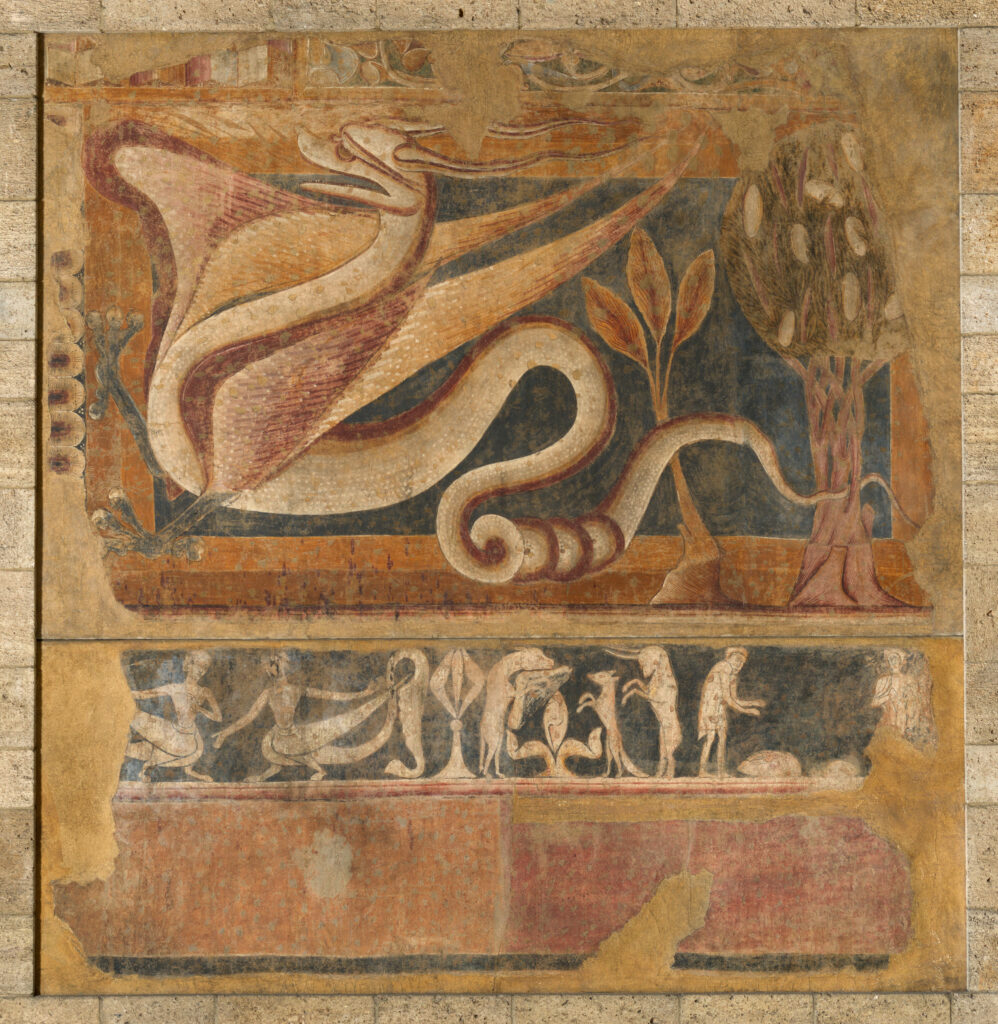
English dragon travelled through Old French and Latin dracō from Greek drákōn, a great serpent. Its probable linguistic ancestry reaches the reconstructed Proto-Indo-European root *derḱ-, “to see”. Related words include Sanskrit dṛś-, “see”, and Old Irish derc, “eye”. The connection suggests a piercing gaze; it does not mean the earliest dragons already breathed fire. The asterisk marks a reconstructed form, not a surviving written word. Dutch draak and English drake also belong to this Latin-derived family.1
There is no established single birthplace for every dragon tradition. Reptiles, dangerous waters and imaginative combinations of animals supplied recurring material. Fossils may have encouraged particular stories, but “people found dinosaur bones” is no universal explanation.2
Across the world, the dragon changes sides
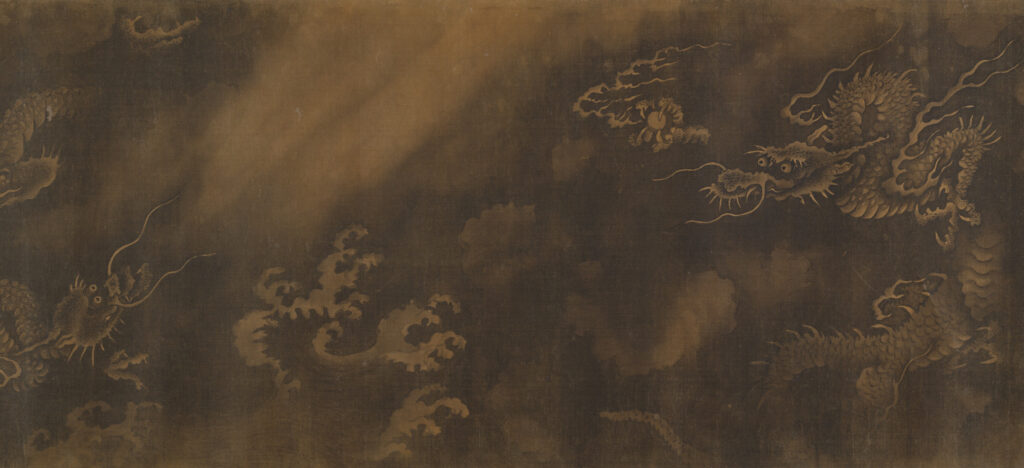
In China, the lóng is associated with rain, rivers, prosperity and imperial authority. Water sustains life but can also overwhelm it. In medieval Christian Europe, dragons frequently represented evil, making their defeat a demonstration of sacred or heroic authority. Neither tradition reduces neatly to “Eastern good, Western bad”.3, 4
Across the Atlantic, names matter. Mexico’s Quetzalcoatl is the “feathered serpent”, a Mesoamerican deity, not simply a European dragon relocated. Farther south, Mapuche narratives in Chile describe Caicai raising floodwaters while Trentren raises the land to protect its inhabitants. These serpents express relationships with landscape and survival, not evidence that every culture inherited one dragon myth.4, 5
Why do dragons hoard gold?
The association predates medieval castles. Greek serpents guarded the Golden Fleece and the Hesperides’ golden apples: dangerous guardians stood between humans and exceptional treasure. Later stories made that guardianship an obsession.17
Our familiar treasure chamber has deep European literary roots. In Beowulf, a dragon guards treasure buried in a barrow; stealing one cup unleashes its fury. In the Norse Völsunga saga, Fáfnir kills his father for treasure and becomes the serpent guarding it. Possession makes him monstrous.2, 6
Tolkien draws on this inheritance in The Hobbit. Smaug occupies the dwarves’ wealth and answers intrusion with devastation. His speech adds another danger: he can manipulate as well as burn. Read symbolically, the hoard is wealth withdrawn from life, protected by someone who cannot bear to share it. That interpretation explains the motif’s endurance without pretending every dragon loves gold.2
The hero’s test becomes uncomfortable. After the monster dies, can the survivors handle its treasure more wisely?
D&D dragons: why Tiamat has five heads
Dungeons & Dragons combines myth, fantasy literature and game design. Its Tiamat borrows the name of the Babylonian primordial sea goddess, already attested in Old Akkadian material. In the Enūma Eliš, she generates gods and later battles Marduk, who makes heaven and earth from her divided body. Her name is related to Akkadian tâmtu, “sea”. This is a creation narrative, not an ancient account of D&D’s five-headed villain.7
The game’s Dragon Queen appeared in Greyhawk in 1975 and received the name Tiamat in the 1977 Monster Manual. Her heads represent the five chromatic colours. The borrowing gives a modern monster the resonance of an ancient divine adversary; her specific anatomy belongs to D&D. No Mesopotamian image has been securely identified as Tiamat: modern illustrations should not be mistaken for ancient evidence.7, 8
Chromatic dragons generally embody destructive appetites; metallic dragons provide benevolent counterparts associated with Bahamut; gem dragons, associated with Sardior, favour psychic power and more independent concerns. The colours become storytelling cues as well as combat rules.9, 10
The tables cover all fifteen principal colour types, using adult fifth-edition defaults and Fizban’s Treasury of Dragons for gems. “Lawful” favours order; “chaotic” favours autonomy. Good and evil concern treatment of others. Alignments are defaults, not compulsory personalities; the explanations summarise their usual characterisation.11
Chromatic dragons
| Dragon | Breath, alignment and nature |
|---|---|
| Black | Acid breath · Chaotic evil Cruelty and delight in ruin. |
| Blue | Lightning breath · Lawful evil Dominance through controlled hierarchies. |
| Green | Poison breath · Lawful evil Manipulation, schemes and subjugation. |
| Red | Fire breath · Chaotic evil Pride and unrestrained acquisition. |
| White | Cold breath · Chaotic evil Vengeful, merciless hunting. |
Metallic dragons
| Dragon | Breath, alignment and nature |
|---|---|
| Brass | Fire breath · Chaotic good Sociable, independently minded helpers. |
| Bronze | Lightning breath · Lawful good Principled opposition to tyranny. |
| Copper | Acid breath · Chaotic good Kindness with jokes and mischief. |
| Gold | Fire breath · Lawful good Justice guided by moral discipline. |
| Silver | Cold breath · Lawful good Honour, friendship and protection. |
Gem dragons
| Dragon | Breath, alignment and nature |
|---|---|
| Amethyst | Force breath · Neutral Cosmic understanding over factional loyalties. |
| Crystal | Radiant breath · Chaotic neutral Curiosity and enthusiastic independence. |
| Emerald | Psychic breath · Lawful neutral Cautious observation and guarded knowledge. |
| Sapphire | Thunder breath · Lawful neutral Territorial discipline and military planning. |
| Topaz | Necrotic breath · Chaotic neutral Independence and fascination with decay. |
Metallic dragons also possess secondary, non-damaging breath options. These families are game categories, not ancient mythological classifications. Other forms and divine manifestations widen the possibilities:9, 10, 12
Other dragons and divine aspects
| Type | Alignment and role |
|---|---|
| Tiamat’s aspect | Chaotic evil Five heads; avarice and devastating wrath. |
| Bahamut’s aspect | Lawful good Platinum; protection and justice. |
| Faerie dragon | Chaotic good Tiny trickster; playful, usually harmless mischief. |
| Moonstone dragon | Neutral Feywild wanderer interested in dreams and stories. |
| Deep dragon | Neutral evil Underdark schemer pursuing knowledge and advantage. |
| Dragon turtle | Neutral Maritime power motivated by territory and treasure. |
Aspects use Fizban’s statistics; deity alignments can differ between books. This is a selection, not every setting’s bestiary.12
Famous dragons: from Smaug to unexpected teachers
Once we recognise those expectations, storytellers can overturn them. In The NeverEnding Story, Falkor, called Fuchur in Michael Ende’s German original, is a luckdragon. His companionship helps the traveller endure fear and keep hope alive. Power becomes something that carries you.13
Game of Thrones makes that comfort precarious. Drogon, Rhaegal and Viserion embody Daenerys’s extraordinary power, but possessing dragons cannot guarantee righteous leadership. Martin distinguishes his intelligent beasts from speaking dragons such as Smaug. Their political meaning comes largely from what humans do with them.14
Then Avatar: The Last Airbender offers the decisive reversal. In “The Firebending Masters”, Aang and Zuko perform the Dancing Dragon before Ran and Shaw. The dragons reveal fire as life and energy, beyond the anger Zuko has relied upon. Their lesson requires humility: the students must change their understanding before they can master their strength.15
Watch Aang and Zuko’s dragon dance on the official Avatar channel →
Skyrim makes the question playable. Paarthurnax resists the dragons’ impulse to dominate through sustained discipline. Meeting him challenges the assumption that a creature’s nature must determine its choices.16
We leave the mountain with a different treasure. Dragon stories ask how power is used: hoarded, imposed, shared or understood. Sometimes courage means confronting the monster. Sometimes it means listening long enough to discover a teacher.
Sources and reading
Historical claims draw on the references below. Readings of power, greed and mentorship are literary interpretation.
1. Word origins. University of Texas Linguistics Research Center: *derḱ- and its reflexes; Etymonline: dragon.
2. European traditions, Beowulf and Tolkien. Carolyne Larrington for English Heritage: Dragons and their Origins; British Library: Beowulf online.
3. Chinese dragons. Smithsonian National Museum of Asian Art: Eleven Dragons.
4. European and American imagery. The Metropolitan Museum of Art: Seven Necessary Dragons; British Museum: Stone bust of Quetzalcoatl.
5. Mapuche serpents. Museo Chileno de Arte Precolombino: Caicai y Trentren.
6. Fáfnir and the hoard. Völsunga saga, chapter XIV, Morris and Magnússon translation; Völsunga saga, chapter XVIII.
7. Tiamat’s ancient identity and name. Sophus Helle, ORACC / University of Pennsylvania: Tiamat.
8. D&D publication history. The Strong National Museum of Play: Tiamat, the Chromatic Dragon.
9. Chromatic and gem powers and personalities. D&D Beyond: Chromatic and Gem Dragonborn; D&D Beyond: Gem dragon families and Sardior.
10. Metallic dragon personalities. D&D Beyond: Metallic Dragonborn; Wizards of the Coast: Bahamut and the metallic dragons.
11. Alignment and colour-table checks. D&D Basic Rules 2014: alignment defaults; D&D Beyond: adult dragon listings; D&D Beyond: crystal, emerald, gold and green listings; D&D Beyond: topaz and white listings.
12. Other dragons and divine aspects. D&D Beyond: Bahamut and Tiamat aspect statistics; D&D Beyond: Moonstone dragon; D&D Beyond: Faerie Dragon (2014); D&D Beyond: Dragon Turtle (2014); D&D Beyond: deep dragon listing.
13. Falkor / Fuchur. Michael Ende’s official website: Fuchur.
14. Martin’s dragons. George R.R. Martin: Here There Be Dragons, 11 July 2024; Game of Thrones, HBO: narrative interpretation of Daenerys’s dragons; series discussed alongside Martin’s design commentary.
15. Aang, Zuko, Ran and Shaw. Official Avatar Legends channel: Aang + Zuko Dragon Dance with the Firebending Masters.
16. Paarthurnax. Skyrim dialogue transcribed from the game, via Tamriel.
17. Greek treasure guardians. Theoi: Hesperian dragon, with passages from ancient authors; Theoi: Colchian dragon, with passages from ancient authors.