A character’s name is often where the writing begins for me.
Before I know every detail of their appearance, I want something I can hear, picture and return to as their story develops. Sometimes it comes from a language. Sometimes it echoes another story. Sometimes the association is something I build myself.
Every name has a thought behind it. Occasionally, several thoughts arguing over the same six letters.
The sisters
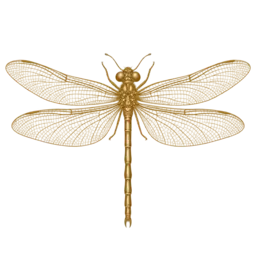
Si, or Sirelia, carries the lotus in my Dragonfly Twins novel, currently in the works. It is the symbol of her fallen royal house, but what draws me to it is resilience. A lotus grows from mud and raises its flowers above the water. Kew describes the plant behind that association. It gives me something to write towards: someone whose circumstances have changed profoundly, yet who still has the capacity to grow.
In the manuscript, the lotus appears on the seal that leads Sirelia towards her hidden identity. Something familiar acquires a meaning she was never taught to recognise.
Her name feels fluid to me. The opening S and the softer movement through the L suggest someone observant, careful and quietly persistent. Those qualities also invite a question: how long can patience remain a strength before it becomes a reason to endure too much?
Her sister, Revana, carries a deliberate echo of Darth Revan. What interests me in that influence is the possibility of choosing between—and looking beyond—the identities of good and evil offered by opposing sides.
Raised close to power and manipulation, Revana gives me room to explore how someone learns to choose when other people have spent years choosing for her. Understanding her motives still leaves room to question her actions. That tension matters to me.
Reading the letters
There is a useful parallel in Austin Osman Spare’s The Book of Pleasure, with its sigils and constructed symbolic alphabet: meaning can also be approached through a drawn form. The illustrated edition from Jerusalem Press includes research on that geometry.
For character design, I can take a name apart and see what its letters suggest.
In SIRELIA, the S becomes a current. The I provides an upright line; the L gives it a footing. Combined into a personal emblem, those shapes could suggest movement around something that remains standing. It fits the lotus and her persistence.
In REVANA, the V can become a descent followed by an ascent. The two As create repeated peaks, while the diagonal of the N crosses between two uprights. I can use those forms to think about division, return and the effort of crossing between positions.
These are my own visual readings. A different typeface or another person’s hand could suggest something else. Their usefulness is in the questions they give me: when does endurance become rigidity? When does independence become isolation?
A name that contains both
That relationship becomes part of the name Sirevathiel, the deity bound to the sisters.
Sire- and Reva- overlap in its spelling, sharing the letters “re”. Their names are already entangled before the reader understands the connection.
The ending -thiel gives the name an almost angelic cadence to my ear. Its final -el also echoes the Hebrew word for “god”. Sirevathiel is a constructed fantasy name, bringing those associations together.
That makes the name a small piece of the story’s architecture: two identities held inside a third, with a divine association that leaves its intentions uncertain.
The same habit, other worlds
The process follows me into games.
In Final Fantasy XIV, my character is Jaliqai Dalamiq. The official naming lore places the Dalamiq on an islet in a great river and says they once worshipped the now-fallen lesser moon.
I was drawn to that combination: the red moon, the water, the island in the middle. I read the moon through my interest in the unconscious, its red colour through my interest in alchemical transformation. The island becomes a place from which to observe the currents around it. For Jaliqai, that suggests reflection, independence and the work of keeping her own centre.
Then there is Rokizi, my Pureblood Sith with the Iroizi Directive in SWTOR. I associate her name with being luminous or illuminated. Her gold carries that idea into her appearance, alongside my interest in alchemy.
Her story also explores authoritarianism and inherited superiority, drawing on the historical parallels between Imperial imagery and Nazi Germany. “Illuminated” becomes an uneasy word for such a character. Does she seek understanding, or believe that power has already made her right?
Yaira, my Echani, returns to light through a Hebrew name associated with shining or illumination. Here, that association gives me a different direction: perceptiveness, clarity, and the challenge of seeing another person accurately.
A shared symbol can lead to very different personalities.
That is what keeps naming interesting. The name gives me a starting point. Then the character has to live with it, complicate it, and occasionally make me reconsider what I thought it meant.